
Unnumbered pageScan 18 of 25
-7-
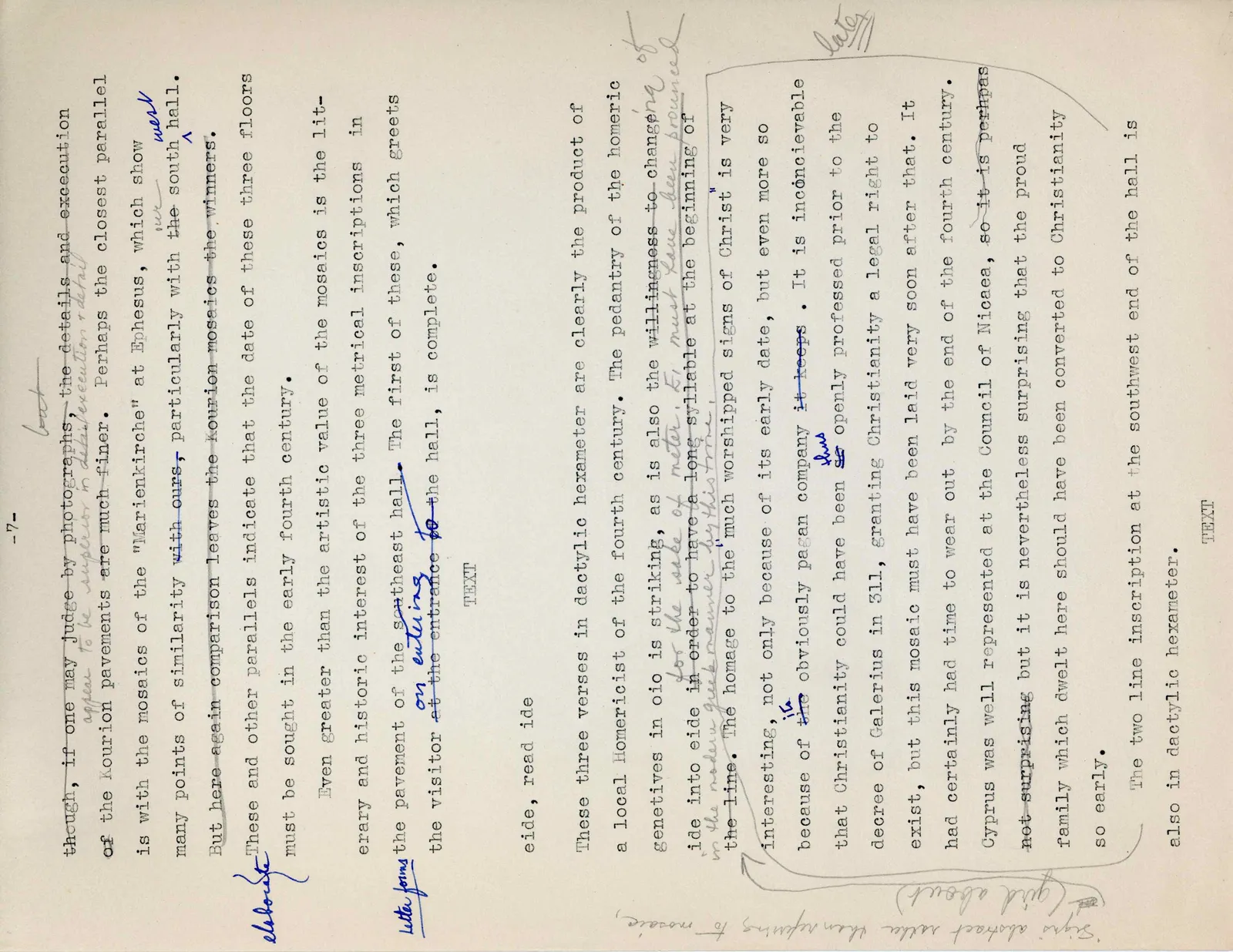
though, if one may judge by photographs, the details and execution of the Kourion pavements are much finer. Perhaps the closest parallel is with the mosaics of the "Marienkirche" at Ephesus, which show many points of similarity with ours, particularly with the south hall. [handwritten: west] But here again comparison leaves the kourion mosaics the winners. These and other parallels indicate that the date of these three floors must be sought in the early fourth century. Even greater than the artistic value of the mosaics is the literary and historic interest of the three metrical inscriptions in the pavement of the southeast hall. The first of these, which greets the visitor at the entrance to the hall, is complete.
TEXT
eide, read ide
These three verses in dactylic hexameter are clearly the product of a local Homericist of the fourth century. The pedantry of the homeric genetives in oio is striking, as is also the willingness to change ide into eide in order to have a long syllable at the beginning of the line. The homage to the much worshipped signs of Christ is very interesting, not only because of its early date, but even more so because of the obviously pagan company it keeps. It is inconceivable that Christianity could have been openly professed prior to the decree of Galerius in 311, granting Christianity a legal right to exist, but this mosaic must have been laid very soon after that. It had certainly had time to wear out by the end of the fourth century. Cyprus was well represented at the Council of Nicaea, so it is perhaps not surprising but it is nevertheless surprising that the proud family which dwelt here should have been converted to Christianity so early.
The two line inscription at the southwest end of the hall is also in dactylic hexameter.
TEXT
Stamp: none
Handwritten note at foot: Sign-, nhot after the Mary? mosaic
65 figures hard to readstruck struck outadded written in above” jug ditto, and what it repeatsword reading not certain