
Unnumbered pageScan 6 of 77
-4-
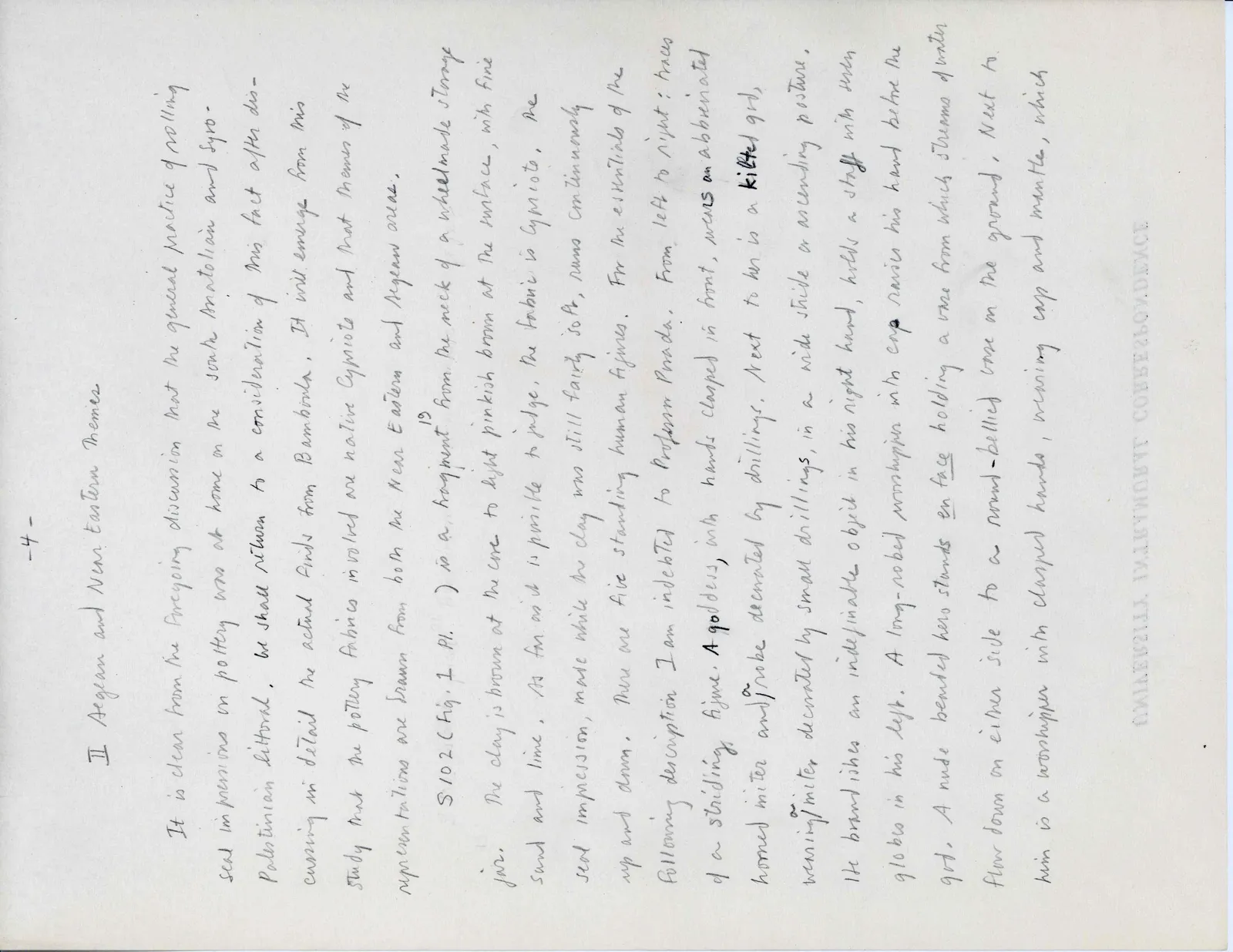
II Aegean and Near Eastern Themes
It is clear from the foregoing discussion that the general practice of rolling seal impressions on pottery was at home in the South Anatolian and Syro- Palestinian littoral. We shall return to a consideration of this fact after discussing in detail the actual finds from Bamboula. It will emerge from this study that the pottery fabrics involved are native Cypriote and that themes of the representations are drawn from both the Near Eastern and Aegean areas.
S 102 (Fig. 1 Pl. ) is a fragment19 from the neck of a wheel made storage jar. The clay is brown at the core to light pinkish brown at the surface, with fine sand and lime. As far as it is possible to judge, the fabric is Cypriote. The seal impression, made while the clay was still fairly soft, runs continuously up and down. There are five standing human figures. For the essentials of the following description I am indebted to Professor Porada. From left to right: traces of a striding figure. A goddess, with hands clasped in front, wears an abbreviated horned miter and a robe decorated by drillings. Next to her is a kilted god, wearing a miter decorated by small drillings, in a wide stride or ascending posture. He brandishes an indefinable object in his right hand, holds a staff with seven globes in his left. A long-robed worshipper with cap raises his hand before the god. A nude bearded hero stands en face holding a vase from which streams of water flow down on either side to a round-bellied vase on the ground. Next to him is a worshipper with clasped hands, wearing cap and mantle, which
65 figures hard to readstruck struck outadded written in above” jug ditto, and what it repeatsword reading not certain