
Unnumbered pageScan 70 of 88
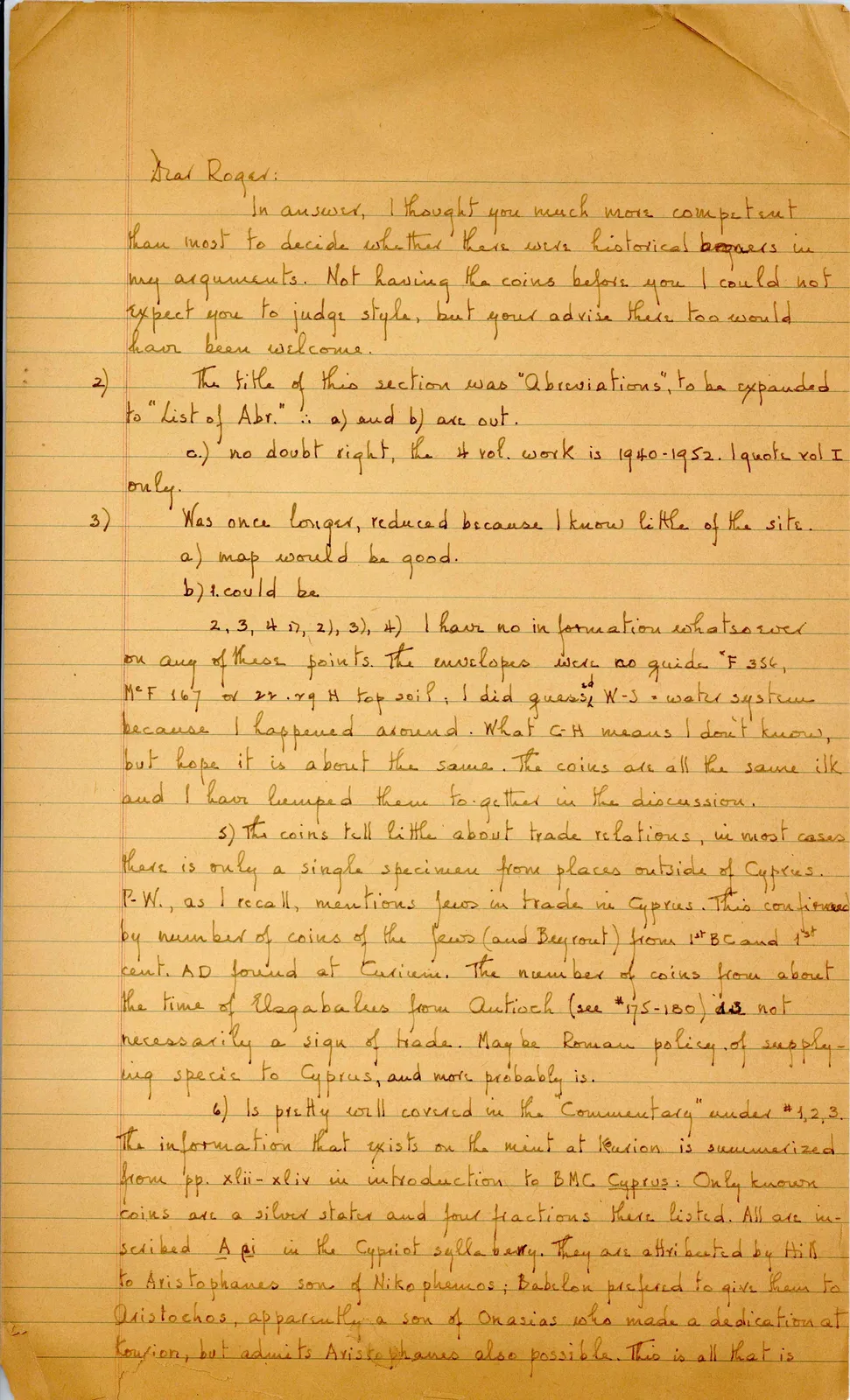
Dear Roger: In answer, I thought you much more competent than most to decide whether there were historical bloomers in my arguments. Not having the coins before you I could not expect you to judge style, but your advise there too would have been welcome.
2) The title of this section was "Abreviations", to be expanded to "List of Abr." : a) and b) are out. c.) no doubt right, the 4 vol. work is 1940-1952. I quote vol I only.
3) Was once longer, reduced because I know little of the site. a) map would be good. b) 1. could be 2, 3, 4 i), 2), 3), 4) I have no in formation whatsoever on any of these points. The envelopes were no guide "F 356, McF 167 or 27.29 H top soil; I did guess, W-S = water system because I happened around. What C-H means I don't know, but hope it is about the same. The coins are all the same ilk and I have lumped them to-gether in the discussion. 5) The coins tell little about trade relations, in most cases there is only a single specimen from places outside of Cyprus. P-W., as I recall, mentions Jews in trade in Cyprus. This confirmed by number of coins of the Jews (and Beyrout) from 1st BC and 1st cent. AD found at Curium. The number of coins from about the time of Elagabalus from Antioch (see #175-180) is not necessarily a sign of trade. May be Roman policy of supplying specie to Cyprus, and more probably is. 6) Is pretty well covered in the "Commentary" under #1,2,3. The information that exists on the mint at Kurion is summarized from pp. xlii-xliv in introduction to BMC Cyprus: Only known coins are a silver stater and four fractions there listed. All are inscribed A pi in the Cypriot syllabary. They are attributed by Hill to Aristophanes son of Nikophemos; Babelon prefered to give them to Aristochos, apparently a son of Onasias who made a dedication at Kourion, but admits Aristophanes also possible. This is all that is … continues
65 figures hard to readstruck struck outadded written in above” jug ditto, and what it repeatsword reading not certain