
Unnumbered pageScan 31 of 95
- 3 -
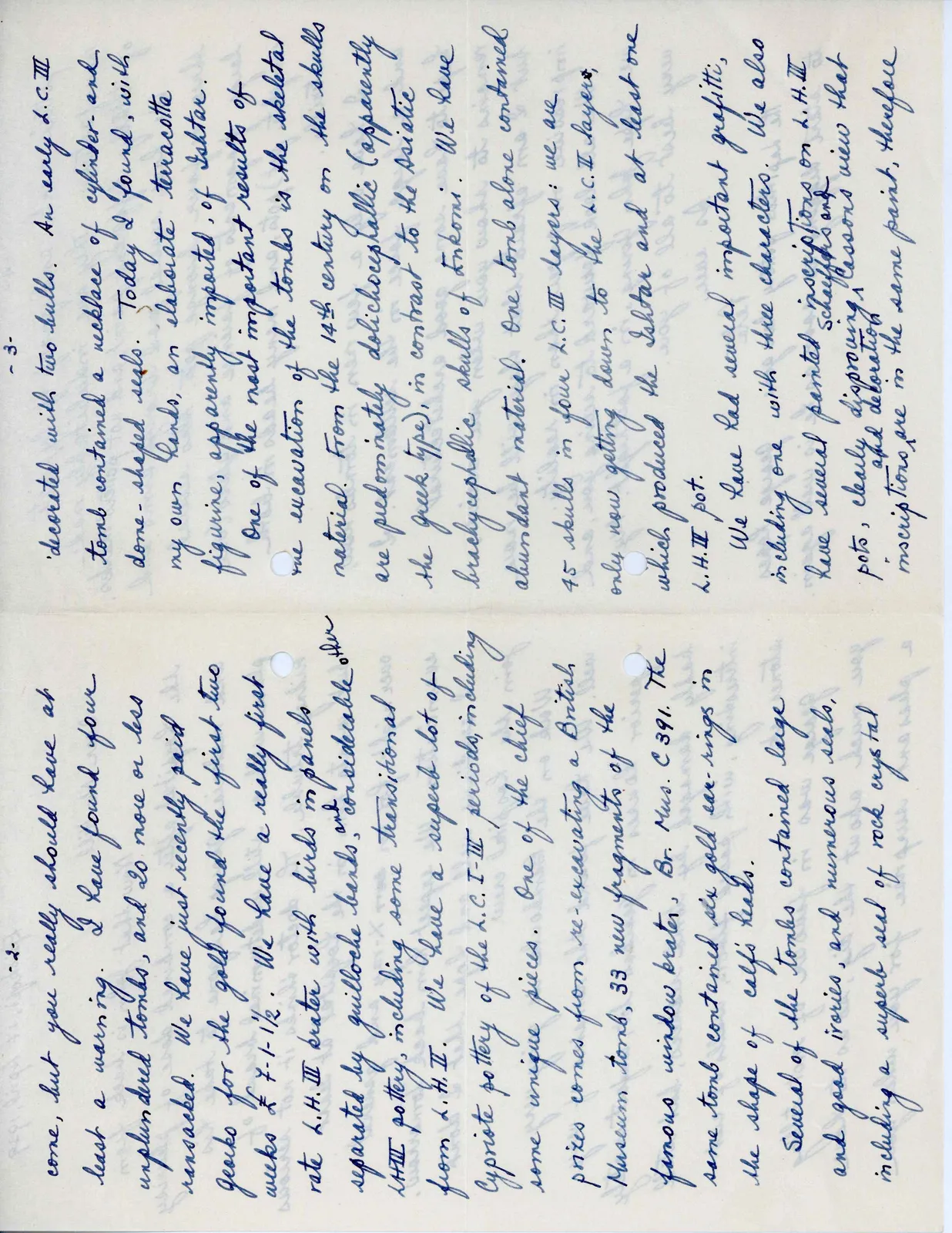
decorated with two bulls. An early L.C.III tomb contained a necklace of cylinder- and dome-shaped seals. Today I found, with my own hands, an elaborate terracotta figurine, apparently imported, of Ishtar.
One of the most important results of the excavation of the tombs is the skeletal material. From the 14th century on the skulls are predominately dolichocephalic (apparently the Greek type), in contrast to the Asiatic brachycephalic skulls of Enkomi. We have abundant material. One tomb alone contained 45 skulls in four L.C.III layers: we are only now getting down to the L.C.II layer, which produced the Ishtar and at least one L.H.III pot.
We have had several important graffiti, including one with three characters. We also have several painted inscriptions on L.H.III pots, clearly disproving Casson's view that Schaeffer's and inscriptions and decoration are in the same paint, therefore
Right page
- 2 -
come, but you really should have at least a warning. I have found four unplundered tombs, and 20 more or less ransacked. We have just recently paid Jeroko for the gold found the first two weeks £ 7-1-1 1/2. We have a really first rate L.H.III krater with birds in panels separated by guilloche bands, and considerable other L.H.III pottery, including some transitional from L.H.II. We have a superb lot of Cypriote pottery of the L.C.I-III periods, including some unique pieces. One of the chief prizes comes from re-excavating a British Museum tomb, 33 new fragments of the famous window krater, Br. Mus. C 391. The same tomb contained six gold ear-rings in the shape of calf's heads.
Several of the tombs contained large and good ivories, and numerous seals, including a superb seal of rock crystal
65 figures hard to readstruck struck outadded written in above” jug ditto, and what it repeatsword reading not certain